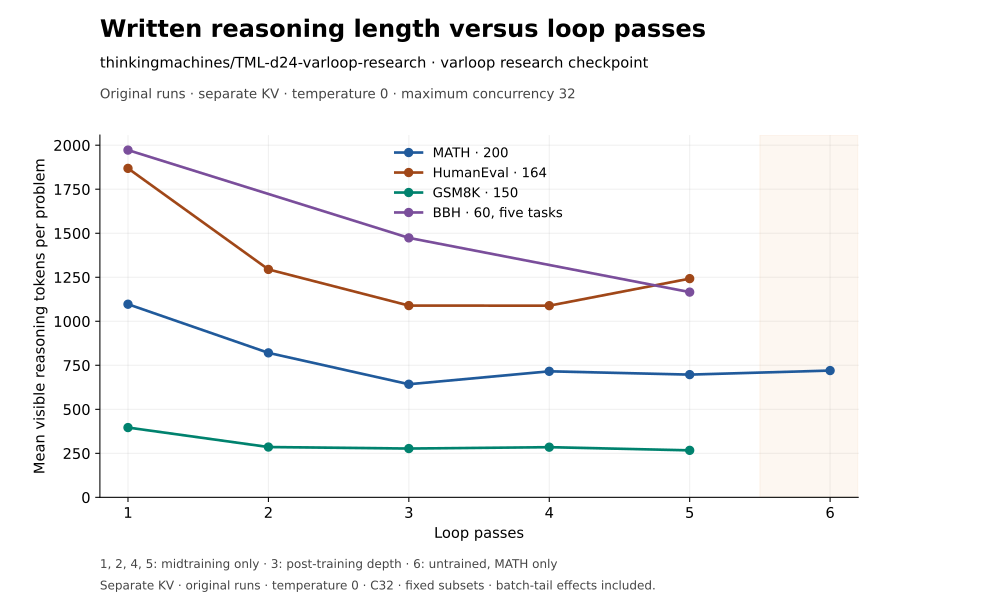
Loop Dial: more depth, less written reasoning
I varied a research model’s loop count. Math and code improved by three passes, reasoning got shorter, and extra depth kept costing more.
Notes on LLM systems, infrastructure, and things I’m building.
I varied a research model’s loop count. Math and code improved by three passes, reasoning got shorter, and extra depth kept costing more.
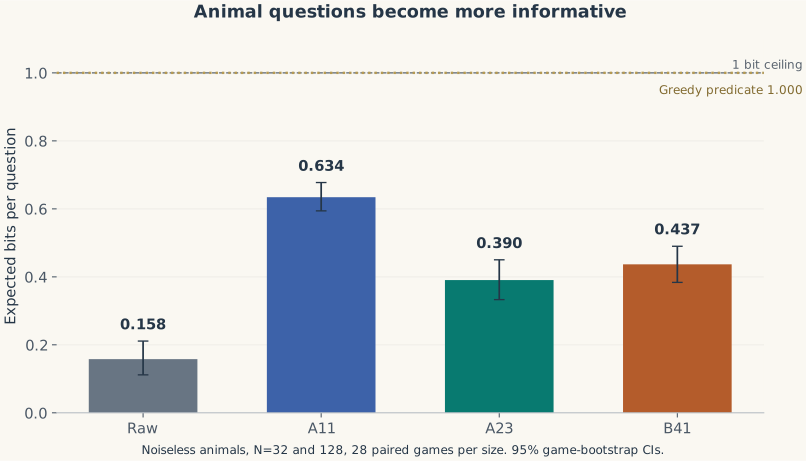
RL taught Qwen3-8B to ask better questions in 20 Questions, but not when to stop.
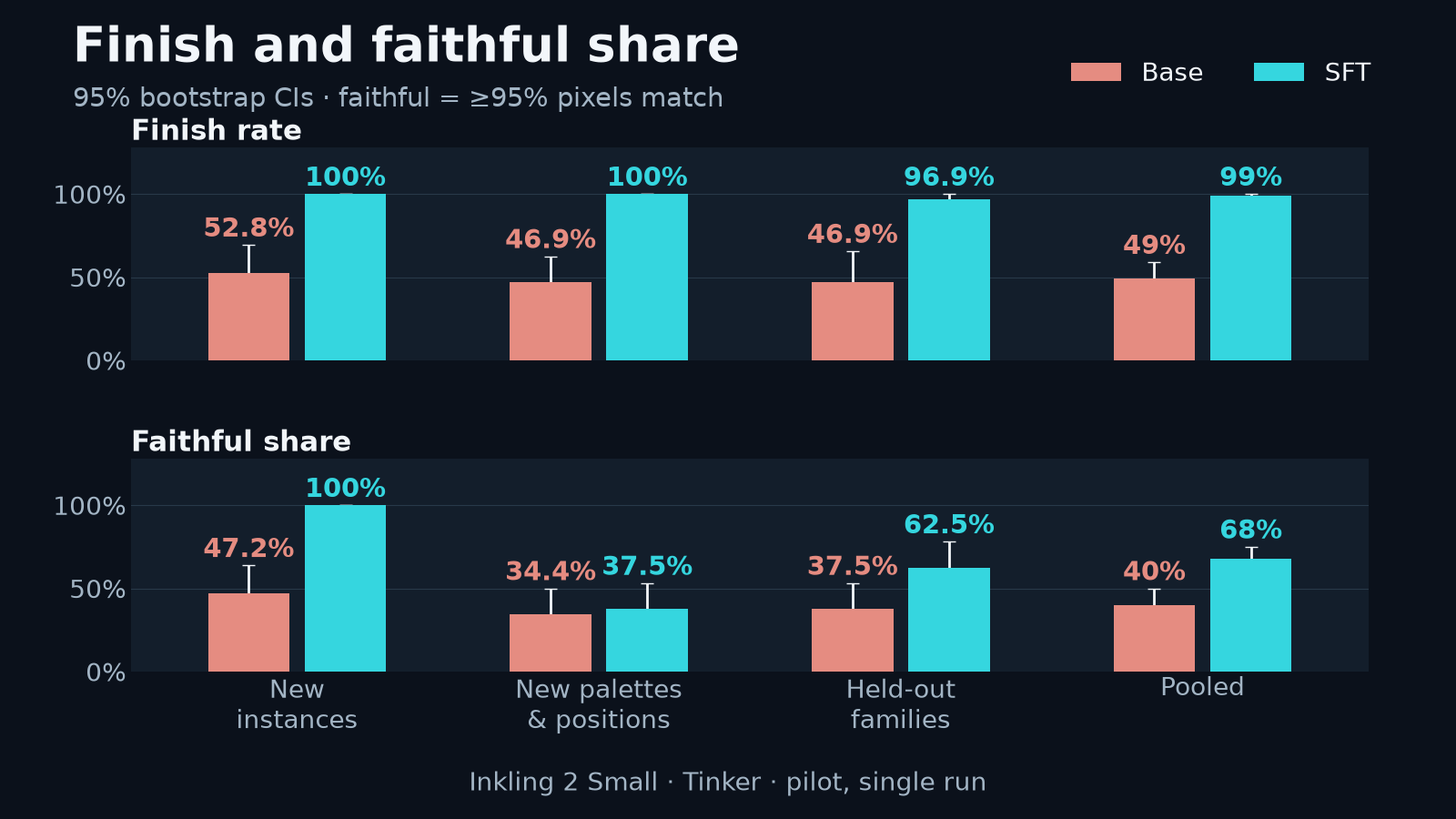
Post-training Inkling 2 Small on Tinker cut mean output tokens from 3,109 to 74 on a pixel-art task. What SFT improved, what it did not, and why the next stage stopped.
Notes on reward hacking in reinforcement learning and RLHF: what it is, why RL is so prone to it, Goodhart's Law and its four flavors, how it shows up in LLMs (sycophancy, evaluator hacking, in-context reward hacking), and the mitigations that exist today.
A ground-up walk through LLM inference: the KV cache, prefill vs decode, a capacity equation for Mistral 7B on an A100, and the model and serving optimizations (GQA, MLA, FlashAttention, PagedAttention, continuous batching, prefix caching, speculative decoding) that make LLMs servable.