
Post-trained Thinking Machines’ Inkling 2 Small on Tinker to stop over-thinking on a pixel-art drawing task. Output tokens fell from 3,109 to 74, finish rate rose from 49% to 99%, and faithful drawings from 40% to 68%.
Reposted by Tinker
I’m a final-year CS student researching LLM inference and evaluation, and a software engineer intern at LevelPlane. Three preprints, GSoC ’26 at RUXAILAB, previously at Koncepts.
Now building Nightly on Tinker: a coding agent using Inkling 2 Small that retrains on test-verified attempts each night.
Post-trained Thinking Machines’ Inkling 2 Small on Tinker to stop over-thinking on a pixel-art drawing task. Output tokens fell from 3,109 to 74, finish rate rose from 49% to 99%, and faithful drawings from 40% to 68%.
Reposted by Tinker
A coding agent on Inkling 2 Small that retrains every night on its own test-verified attempts, and only ships a new version if it beats the old one by more than measured noise. Hidden-test graders caught every cheating patch in a live red-team.
Tinker · OpenCode · Modal · Python
A multi-tenant GPU compute control plane with runway-aware scheduling.
Finds what breaks LLM prompt caching, opens a fix PR via an agent, and checks behaviour with a quality guard before merge. On Qwen3-4B (vLLM, L4): cache-hit rate 0.3% → 80.7%, median TTFT 2.0s → 1.4s.
Real-time incident analysis with deterministic root-cause ranking and evidence-backed AI explanations.
1st place · Codex Community Hackathon, Calicut
A Claude Code skill that makes you read the code it wrote.
1,100+ GitHub stars · Part of the Mintlify OSS Program
Independent work on inference and evaluation reliability.
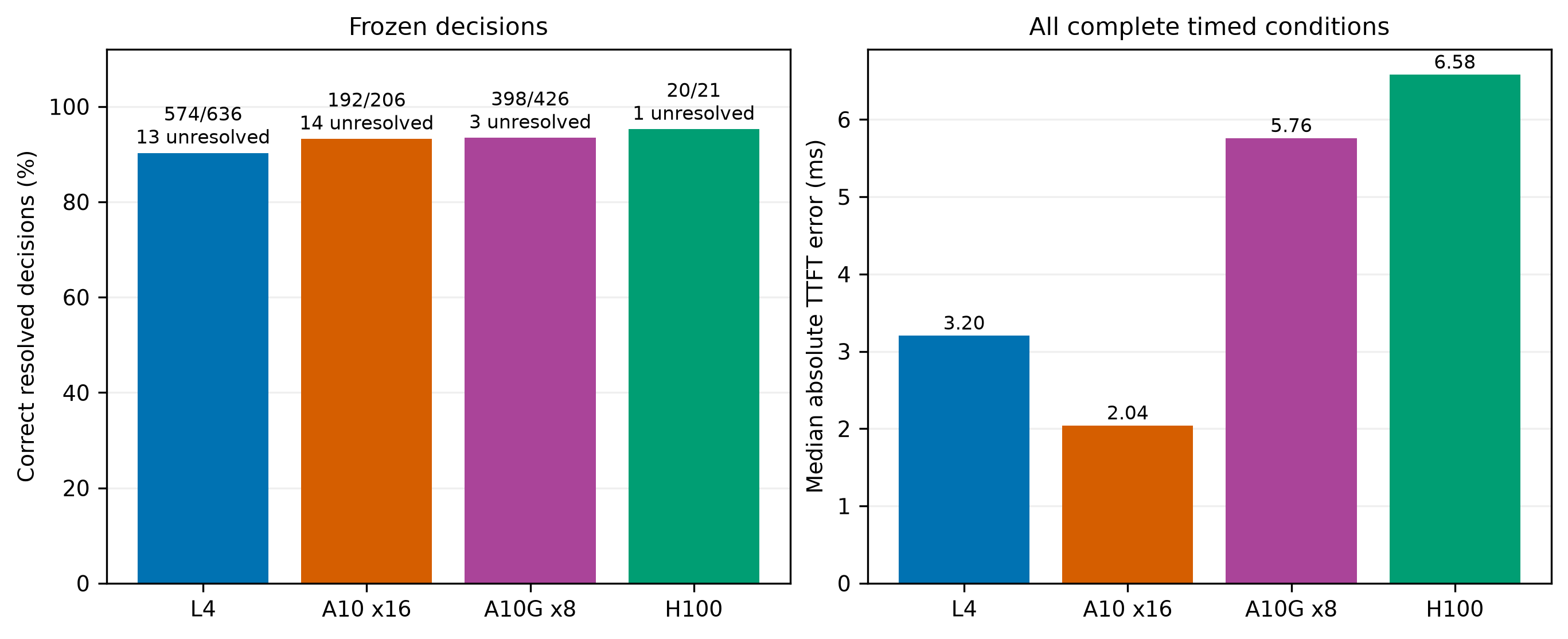
Tests when reloading a conversation’s saved KV cache is faster than recomputing it, using a break-even bandwidth rule across L4, A10 and A10G.
Frozen predictions correctly classified 574/636 resolved decisions on L4 after about a minute of calibration.
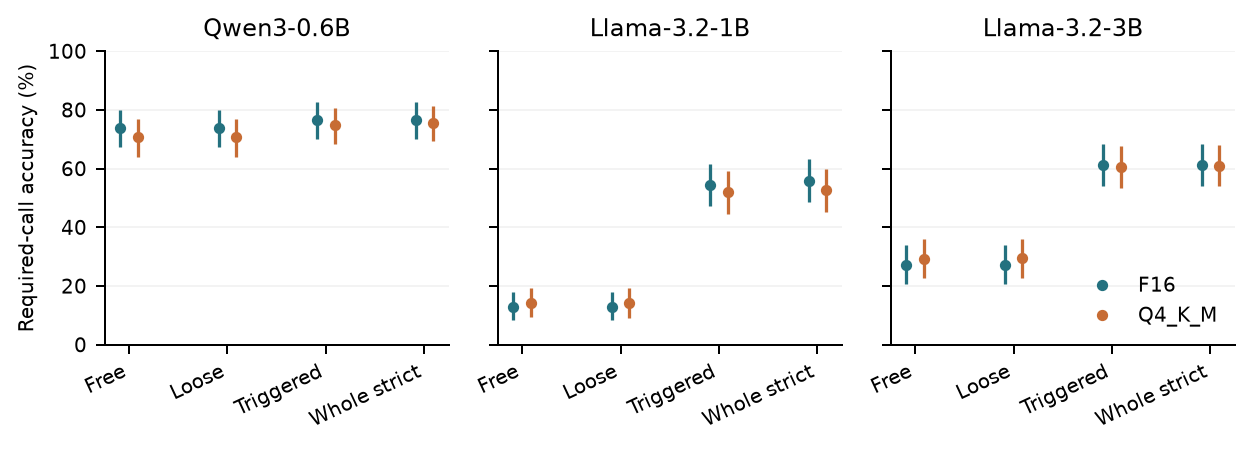
Tests whether strict grammar-constrained decoding recovers the tool-calling accuracy small models lose when quantized to 4 bits.
Llama-3B Q4: 0% to 88.3% on parallel calls after changing the output format (non-randomized sensitivity analysis).
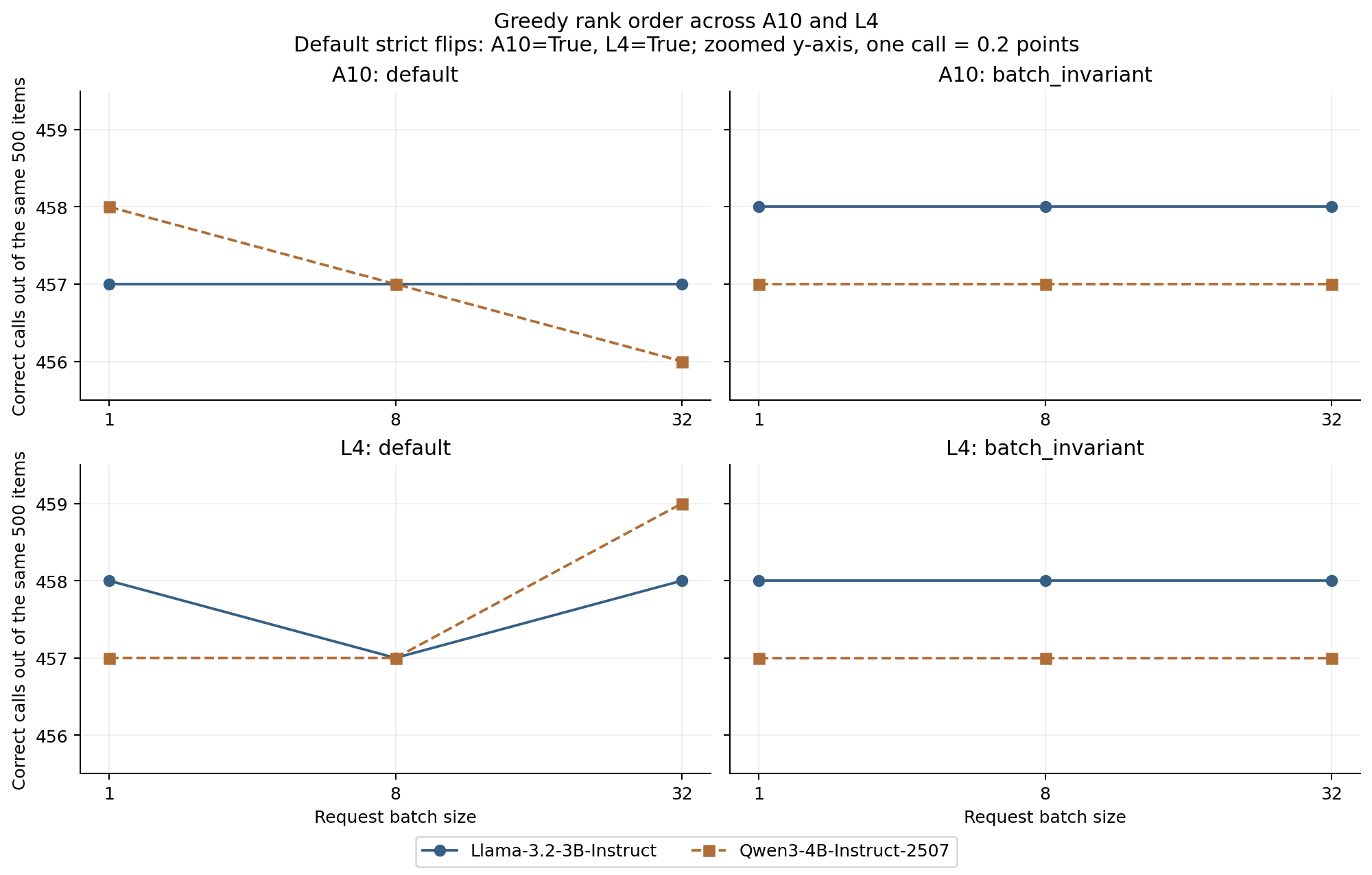
Measures how much GPU nondeterminism changes LLM benchmark answers and rankings.
Default greedy decoding changed 2.0–4.6% of answers; a near-tied ranking reversed between GPUs.
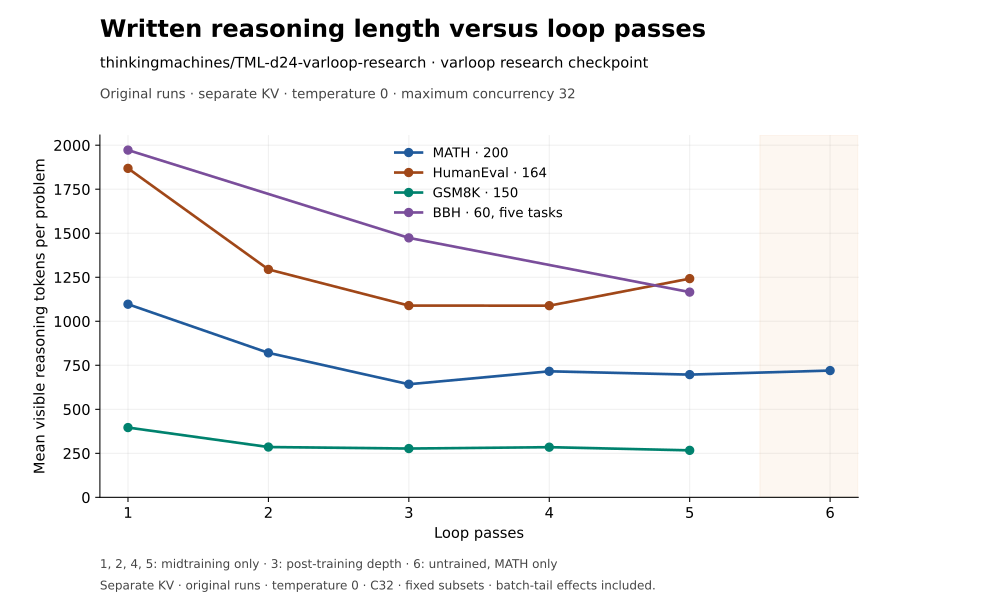
I varied a research model’s loop count. Math and code improved by three passes, reasoning got shorter, and extra depth kept costing more.
 LevelPlaneSoftware Engineer · InternshipNov 2026 to Present
Ernakulam, Kerala, India · Hybrid
 RUXAILABGoogle Summer of Code 2026 ContributorMay 2026 to Oct 2026
Remote · Open Source · Full Stack
Vue.js · Python · Firebase · Cloud Functions · LiveKit
 KonceptsProduct Developer · InternshipJul 2026 to Aug 2026
Hybrid · Product · Full Stack
Python · PostgreSQL · Next.js · TypeScript
 NIELITSummer Intern · InternshipMay 2025
Kozhikode, Kerala · On-site · Backend · Web
Python · Django
 IEEE OESFounding Chair · IEEE Oceanic Engineering Society Student ChapterMay 2024 to Feb 2026
Chinmaya Vishwavidyapeeth, Kerala · Leadership · Community
B.Tech, Computer Science · CGPA 9.81 / 10.0
Exploring LLM serving & KV caches · RL environments · GPU kernels (Triton)